Listen.....
to the children laughing
as they splash in the river,
orange with the reflected
Autumnal foliage.
Listen.....
to the leaves crunching
beneath running feet
never stopping to catch breath
or look behind.
Listen.....
to the geese cackling,
calling to each other
as they fly in their V
past the fiery sun.
Listen.....
to the splash of the salmon
as it again fails
to breakthrough the frothy,
full flowing water.
Listen.....
please listen.
Do not dispute what I hear.
These sounds are in me,
they are part of who I am.
Listen.....
the laughing, crunching, cackling and splashing
drown out the buzzers, shouting and cries.
These sounds put a smile on my face,
give me contentment in this dark, grey place.
Wednesday, 1 February 2017

Sunday, 18 January 2015
My Wild Places
I have just finished reading the first of my Christmas
books ‘The Wild Places’ by Robert
Macfarlane and have that mixed feeling of sadness and contentment that comes
with reaching the last page of a book which you have lost yourself in for the
duration of its story. The book in this
instance was a non-fiction piece of writing but the story it told was about
finding the wild places of Britain and Ireland.
Macfarlane began his writing with the belief that true wild places
existed beyond the touch of ‘human history’ and concluded that wildness can,
and frequently does, exist alongside human marks made on the earth.
As I was reading I began to think about what places I would
consider to be my wild places. The places where I felt most connected to the
natural world and where I enjoyed returning to. The first four that sprang to
mind are the four below.
The
Glen

This was where I spent a lot of my childhood with my friend
Nina. We would go ‘down the glen’ and collect tadpoles from the burn, make a
bridge across to our secret island, pick raspberries and just generally be free
to do as we wished. Our glen was at the edge of a run down town in central
Scotland where many years ago mining was the main employment. I now live 1 ½ hrs drive away near the
beautiful Angus Glens which are by far a different kind of glen altogether. Nina
lives in Seville in Spain but her parents still live in our childhood hometown.
In summer 2014 we met up at the home of
Nina’s parents and we took our two oldest children to visit ‘ our glen’. Despite all the wild places I have been since
I last visited here ‘the glen’ still had the ability to stir something inside
me and in my mind I returned to the wild, carefree days of my childhood. Our
daughters ran off exploring as soon as we passed through the gates and I felt a
lump in my throat as I watched the next generation exploring our wee piece of
the wild.
The Burn

This burn runs along the bottom of the field behind our
house. In the summer it’s not much more than a trickle of water but in the
wetter months it can be as high as the measuring stick seen in this picture. On
June 22nd 2013 I took our dog his usual wee walk to the bridge over
the burn and stood on the bridge watching a deer bound across one of the
fields. As I was watching I heard a plop as something disturbed the water and
looked down to see what it was.
Immediately I saw a long brown body
just immersed and no more and swimming towards me, a moment later the
body emerged from the water and the next thing I knew I was staring into the
eyes of an otter as I gazed down at it and it looked curiously up at me. I was
transfixed and it had no inclination to turn and flee so we stood like that for
a good few minutes before the otter decided it had better things to be doing.
Me, I could have happily stood like that all day.

One of the Angus Glens and in the Cairngorm National Park,
Glen Doll is glen we visit most frequently. No matter what time of year it is
the car park is never empty as this is where people come to climb the two Munros
Driesh and Mayar, to walk Jocks Road to Braemar, to visit the beautiful Corrie
Fee or just to walk around the wooded pathways and experience the fresh, clean
air. It is highly unlikely then that you will not meet people when out walking
but there is one pathway we often take that other people seem to overlook. The
pathway takes you on a circular walk by the edge of the river South Esk, past
the stony river edge where we like to search for interesting stones and river
life, over a bridge where you can play a great game of Pooh Sticks, through a
dark, mysterious wood and past the mountains where you can hear the stag rut in
the autumn. The land tells the story of how it was formed (assisted by my
husband’s narrative) and large erratics lie where they have been deposited by
glaciers around 14-15,000 years ago. It’s strange to think that these boulders
our children now clamber over and jump off were once carried by ice through a
landscape that we today would not recognise, at a time when mammoths roamed the
land.
The Wood

I had never been in this wood until we got Ben our dog. It
is just yards from my horses’ field but I had no need to go into it until Ben
started coming up to the horses with me and required a walk once the work was
done. I had never taken the horses in as I believed the wood was too dense and
the ground too uneven to ride safely. The wood is only about half a mile long
and not very deep. There are fields to one side, and roads at the other side
and both ends. If you time it right you can walk through the wood and meet no
one at all, half an hour at either side of your time slot and you will meet the
same people walking their dogs no matter what day you are there. Despite the small
surface area, in this wood I have encountered an amazing array of wildlife. It
is home to red squirrels and at one time there were six of these rusty tailed
characters inhabiting the tree tops and caching their winter supply in the
undergrowth. It looked for a while that this population had disappeared and one
regular dog walker informed me he had seen the last one being eaten by a
buzzard, the tail having been dropped on the soft grass underneath the tree the
buzzard had dined on. I left that conversation
with a heavy heart. A couple of weeks
later Ben alerted me to a red coated character darting up a tree and I stood
and looked up into the tree canopy as two alert and curious eyes stared back
down at me. On another occasion we were approaching the end of the wood and as
I made to retrace my steps something flew right in front of me then landed on a
branch just in front me. It was my first, and so far only, encounter with a
Little owl. On other occasions I have watched Great Spotted Woodpeckers drum on
the trunks of dead trees and just this week a Roe deer bounded silently through
the snow yards from where we were walking.
There are also flocks of Great Tits and many different types of fungi
depending on what time year you visit. I would never have believed this small
area of woodland would be home to such a rich variety of flora and fauna and I
think Robert Macfarlane was right when he reached the conclusion that “ There
was as much to be learned in acre of woodland on a city’s fringe as on the
shattered summit of Ben Hope”.
Friday, 9 January 2015
Everything Endures
Quite literally just after I had written down the last word of this reflection yesterday my mum came through the door and told me my grandpa had passed away. Writing this was my way of coping with the waiting and the sadness and I decided to post it on my blog in memory of him.
ANDREW AITKEN 30/04/1923-08/01/2015
It is the New Year and rather than thoughts of new
beginnings and moving forward my thoughts seem to be concentrated on death and
dying. Some of these thoughts are brought about due to the consequence of
working with adults who are predominately in the winter of their lives. Indeed
in winter many seem to melt away from this life in large numbers, some expected
others not.
Reasons closer to home are also affecting my thinking and as
I write this my grandpa, my dad’s dad, is lying in hospital on the cusp between
living and dying. He is ninety-one approaching ninety
two in the spring and
when we last saw him on 27th December 2014 he was happy and content
surrounded by every member of his immediate family, my granny, his son and
daughter, his son-in-law and daughter-in-law, his five grandchildren with their
spouses and his five great-grandchildren with two more expected in March. He was happy but he was tired and there was a
feeling among us all that this would be the last time we were all together. Yet
there was no sadness, just joy in being there at that moment in time.
My grandpa’s deterioration in health prompted a text
conversation with my friend last night on the subject of death. Admittedly it
was not the cheeriest of conversations but it was interesting. We discussed our
reactions to death now as opposed to our reactions when we were teenagers. At
this stage in my life my other grandpa passed away after years of living with
Alzheimer’s disease. My response to his death was to cry inconsolably and
internalise the loss I felt. It was in many ways a selfish grief I experienced
but then as my friend pointed out “ Teenaged selves are very self centred and
experiences of death at that age will be difficult”. So is experiencing a death
less difficult now in my thirties than
it was in my teens.
As I have been walking in the woods this morning with our
dog, mucking out my horses’ field, cleaning out the hens and walking Ben dog
again this is primarily what my thoughts around death and dying have centered on, is it still a difficult subject to deal with? My friend and I touched on
this in our conversation both feeling our society is not very confident when
dealing with someone who is nearing the end of their life. Rather than looking
at the person and allowing a dignified death free from interference, there
seems to be a need to turn to medicines and medical settings to try and prolong
the inevitable outcome. As my friend rightly pointed out, dying is part of
living. The two come as a package and every minute of every day people are
reaching a natural time in their life when they are ready to exchange life for
death.
This exchange also takes place daily in nature. A queen bee
sees through a summer of reproducing then dies having led a brief, productive
life. A salmon makes the final journey to its spawning grounds, ensures more
generations will follow then dies. A
flower blooms, produces its pollen then fades and dies having ensured more
colour will appear next spring. A dragonfly emerges from the pond, finds a mate
and after only a day of sunlight dies, the eggs containing the next generation
laid and waiting to emerge. Living is natural and dying is natural. One cannot
exist without the other.
Looking at it in this way I find death is not as difficult
to deal with as it was when I was a teenager, or when I was even younger and at
an age when the tears would flow over the death of a stick insect. Death is
actually a fascinating and contemplative subject and one which we should not
shy away from. Loosing someone will always be difficult even with an
understanding that this is their time and keeping them with us any longer would
be unfair. However, I believe everything and everyone endures in some form or
another be it in the new blooms that emerge in the spring, the dragonflies that
unfurl their wings as they leave behind their watery nurseries, the young
salmon beginning their migration, the new queen bees pushing their way out of
the soil where they slept away the winter or the nineteen family members who
are there and together because of you and who all see you as their inspiration.
Sunday, 10 August 2014
A Story of a Queen
The last icy cold night of the winter had been past a few
weeks and the sun was rising higher and higher in the sky with each passing
day. There was a warm earthy smell in the air and the stillness that had
settled over winter was gone, as all around life began.
In a tunnel just below the earth there was a
stirring....then, from where she had been hibernating over the winter months, a
queen bumblebee emerged. She gave herself a little shake then set off to find
some flowers rich in sweet nectar to provide her with much needed energy.
The previous spring the garden the queen bee had hibernated
in had been like a sweetie shop to a bumblebee. There had been lilac lavenders
scenting the air, pink foxgloves growing in the borders and places where the
grass had been allowed to grow which hoisted all manner of bumblebee friendly
plants. Now the queen, weak after her long sleep, flew around searching in vain
for a suitable flower. The borders of the garden were bright with blues,
purples and pinks but the pansies that displayed these colours were no use for
the queen as the nectar and pollen contained within them was minimal. There
were no foxgloves to be seen and the grass had been cut short and stumpy. The
queen bumblebee searched and searched for a flower that contained sweet nectar
but after a while she became too weak to fly and landed on a grey concrete
slab, unable to get up again.
A short while later a loud yell filled the air and a young
boy called to his sister to watch where she was putting her foot as she was
about to stand on a bee. The girl just missed the queen bee and both of them knelt
down to have a look. “ Poor thing” said the girl “ I think she needs some
energy. Quick go and ask Mum for a small container with a few drops of water
and some sugar in it. Oh and a jar” The boy followed the instructions his
sister gave and was soon back with the sugary solution. They placed it down by
the queen bee and she lapped it up. Before she had time to fly off the girl
carefully caught her in the jar her brother had also brought along. “I think
she will happier in our wildlife garden” said the girl. “Our new one that dad
helped us create after he tidied up here
is much better than this patch ever was.” So together they carefully took the
queen bumblebee to a grassy patch full of insects, birds and (best of all for
the queen) lots of wildflowers! They opened the jar and, full of energy from
the sugar liquid, the queen flew up and out while the children watched in
delight.
That would be a happy ending but it isn’t where the story
ends. ..................
The queen bumblebee buzzed her way around lots of different
flowers, releasing the protein rich pollen from the flower using her high
pitched buzz. When she was full she searched around for somewhere she could
build her nest. She didn’t have to search far before she came across an old
tree trunk lying on the ground. She
examined it and decided it was a suitable place to lay her eggs. For the next
two weeks she sat on her eggs until they hatched into female worker bees. The
queen then laid more eggs and the worker bees ensured no predators attacked the
nest, they kept the nest clean and they collected pollen and nectar for
themselves, the queen and the new bees that emerged. The queen now had no
reason to leave the nest and her sole job was to lay eggs. In the late summer
male bees hatched as well as new queen bees. The males grew and left the nest
to find a mate, never to return. The
queens left to mate but continued to return to the nest at night.
As summer neared an end the male bees and the female worker
bees died, such is the short life of a bee. The old queen also passed away but
she left behind many new queen bees. These queen bees made themselves a warm
hole in the soil and settled down to sleep until the warmth of the spring
coaxed them out to begin the cycle again. She also left behind many plants that
she and her offspring had pollinated. Plants that would not be around if it
wasn’t for the busy bumblebee.
Friday, 21 March 2014
If I Reach an Age..
If I reach an age,
a stage where
I cannot always clarify
my actions or recall
my thought processes,
I hope there will be
someone present who knows
me well enough or someone
who has taken the time
to get to know me.
Someone who has taken
time to get to know me
so I am not a nuisance
because I ‘wander’.
Actually, I was never one
for sitting doing nothing,
so please don’t try and
keep me resting
when my body is still
able to be active.
My body is still able
to be active and,
as a result, I am not
trying to escape.
I am merely trying to
get outside to hear the
birds, breath the air
and allow the consistent presence
of nature to penetrate
those deep recesses of my memories.
Deep recesses of my memory
that still recall happy
days long ago.
Days when we would walk
in the woods seeking red squirrels,
search in ponds for frog spawn,
comb the beach for treasures.
Ask me about these times,
I can share stories and
perhaps even impart knowledge.
Stories and knowledge have
been laid down in the
areas of my mind that have
not yet succumbed
to the tangles and plaques.
Some gentle coaxing
will encourage them forth,
once released they will be
happy to be shared, relived
and bring joy.
Bring joy to me as I
quietly laugh at
the image of a wee boy
wet with sea water and
a bonnie girl seeking
mermaids purses in
the tide line.
Joy to you as you
realise you’ve reached me
and can share these memories.
You’ve reached me because
you have taken the time.
Time to sit with me,
time to speak with me,
time to not watch the time,
to just be present so I can
be present in a time that
I loved and didn’t want to lose.
This is all I hope for if I
reach an age, a stage....


Saturday, 15 March 2014
Letting Nature take its Course
Someone recently told me that her 27 year old son had out of
the blue informed her that he really appreciated all the things they had done
together when he was a child such as going outdoors and visiting museums. He
went on to say that he had assumed these activities were part of everyone’s
family life and it is only in recent years he has discovered not everyone did
have the privileges he and his sister had. This had really struck home when a
friend had admitted to him she had only recently discovered dinosaurs were once
alive and not just constructs of the film industry.
The privileges he referred to did not involve an excess of
material things and money. They were simple privileges like having the freedom
to run outside in the fresh air, to learn about the wildlife and plants that
shared the outdoors, to explore without being on a tight rein and to visit
interesting places that enhanced learning about the natural world past and
present. There is no doubt these
experiences were enjoyed at the time, but the real appreciation of how
important they were in the development of self did not come until many years
later.
Months after this conversation we had a rescued hedgehog
staying with us for a holiday and in conversation with a different person I
stated that I really hoped my two children would always appreciate how
privileged they were to have had such close contact with a wild animal. The
person I was talking to shook his head and said “Nah they won’t!”
I will admit here and now that as I write this my two are
sitting together in the living room watching CBEEBIES. However, it is the first
time they have had the television on in three days as we do limit their screen
time. The rest of the week has involved carrying out a pond project, planting
bulbs, numerous walks with Ben dog and bat watching. At the weekend we visited
a country park where we learned about different trees, found a frog and played
in the play park. This is typical of our week days and weekends and as a family
we do a wide variety of activities, with the scales leaning more towards nature
based entertainment. When I reflect on who plans the activities I have to admit
it is usually me. I like to form ideas in my head and I like to be organised so
no precious time is wasted. On saying that I will usually offer a choice; woods
or beach? Country park or the glens? Turn left at the end of the drive or
right? What should our project be on? My husband likes being outdoors and is
happy to follow my lead, only complaining now and again that his weekends are
never restful! Our children also seem to enjoy being outside and learning about
nature but I admit at times they do seem to take things for granted. This
occasional apathy and the above conversations are why, I suppose, I am sitting
here just now writing my thoughts down.
As I mentioned we recently had a hedgehog staying with us.
She was rescued two years ago and was too young to hibernate so was cared for
by friends over the winter. In the spring attempts to release her were
unsuccessful as she would just throw herself onto her back so her soft,
vulnerable tummy was exposed for any quick witted predator to take advantage
of. As a result she still lives with her rescuers and we look after her at holidays.
On Hedgie’s (friends choice of name is not very original) first stay over both
son and daughter were excited to have her around. Subsequent visits did not elicit
the same enthusiasm and close contact with this essentially wild animal is now
treated in the same manner as looking after Ben dog, the cat or our two hens
and cockerel.
When Hedgie is residing with us she does her bit for
hedgehog conservation and has visited my daughter’s primary two class and my
son’s nursery class. On these visits I have first found out what the children
know about hedgehogs then I have told them Hedgie’s story before introducing
the star herself. As Hedgie has a wee wander around I tell the children more
about hedgehogs and they have the opportunity to ask questions that I am
hopefully able to answer sufficiently! On these visits I have observed my own
childrens’ reaction to having Hedgie introduced to their friends. I have noted
wee smiles on seeing how excited their peers are to meet a real hedgehog and
pride at being asked by their teachers a question about their unusual house
guest. Once home, the opportunity to feed and water her is met with a ‘if I
have to’ attitude.
“So, beach or woods?”
That is usually the question of the weekend, or a variation of it
anyway. Following a wee sibling disagreement for the sake of disagreeing a
decision is usually made and off we all set with Ben dog sitting a bit too snug
in the boot of our tiny car. Sometimes on the way to our chosen destination
there is some grumbling about how far it is (anywhere is too far for a four
year old who doesn’t like being confined to a car seat) and complaints about
being too tired to walk. Husband and I exchange looks that say “this is going
to be fun!” Inevitably we get there, children and Ben dog are released and off
they go. Our daughter will always be right off on her own, head down, looking
for treasures in the form of stones, shells, cones, beasties, egg cases etc.
Our son likes to stick closer to us until water is spotted. This water could be
in the form of a puddle, a burn, the sea or a loch but as soon as he spots it
he heads towards it and if possible and safe will often end up in it! Ben dog,
in the meantime, will be frantically running around trying to ensure we are all
within close proximity to each other as is the nature of the Border Collie.
Unless it’s very cold or somebody has become too wet for
comfort it is usually myself or my husband that announces it’s time to return
home. Nobody protests too much and nobody enthuses about how much fun they have
had, instead they make their way back to the car, fall into their seats and
usually have a wee snooze on the way home. Once home the question about what’s
for dinner normally arises and permission is asked for them to play on the computer
or watch telly for a bit. A few weeks later work folders are sent home from the
school and daughter’s teacher has commented that her weekend news is always a
joy to read as we do such interesting things. The teacher also mentions that
she did not know what a murmuration was until our daughter wrote about going to
a local reserve to watch a starling murmuration. She later told us at parent’s
night her husband was a bit smug when she got home and asked him if he knew and
he did!
We are lucky to have around fourteen species of birds visit
our garden including two Great Spotted Woodpeckers, yellow hammers and, in the
last week, goldfinch. We take part in the RSPB’s Garden bird watch every year
and if the woodpecker has not visited for a while and suddenly appears, or a
new bird visits such as the goldfinch someone will point it out. I think it is
fair to say that I spend the most time out of everyone watching the birds and
my husband would come next. In fact I am writing this sitting at the bedroom
window so I can watch the birds at the same time. Sometimes I wonder if our son
and daughter appreciate this wildlife that we have on our doorstep as they
don’t initiate filling the feeder and won’t sit down to observe the birds
unless prompted to do so by one of us. I worry we are not making enough effort
to develop their interest in and knowledge of these beautiful birds that live
in such close proximity to us and now expect that we will help provide them
with food, water and safe shelter.
The other day I was at one end of the kitchen and my son was
at the table eating a snack when he suddenly shouted me over. I went over and
asked what it was he wanted fully expecting it would be another satsuma as he
eats them like sweeties at the moment. What he actually wanted was to show me a
house sparrow that was perched on the feeder outside the window. I praised him
for his good observation skills and we
watched it until it flew away, whereupon he decided another satsuma might be
quite a good idea!
What am I trying to
establish from these reflections/musings?
To be honest I am not entirely sure myself. At times I worry
overexposure to the above activities will result in our son and daughter reaching
a saturation point whereby they no longer want to inhale the great outdoors,
observe the wildlife or search for natural treasures, too much of a good thing
as they say. At other times I become concerned we are not doing enough to
nurture the seed inside them that will grow and flower into a life-long passion
and understanding of the natural world. As parents we cannot dictate to our
children what they will be as adults but we can’t help having hopes for them. One
of my hopes is that both our son and daughter will always take pleasure from
the world around them and, more importantly, will always care and advocate for
the other animals and plants that share this fragile earth with us. Are we
raising them in a way that will give them ample opportunity to do this?
Going back to the conversations that began this piece of
writing, the woman whose son thanked her for his nature based childhood works
for a wildlife organisation and as a result her children had more exposure than
most to the outdoors. There was probably a period in between where other
teenage pursuits took precedence, but
twenty years on the importance of these early experiences has been
appreciated and acknowledged. The “Nah they won’t” person is a cynical social
worker worn down by the strains of an often demanding and unappreciated job (I
can say this with little irony being one myself). However, he is also Hedgie’s rescuer
and someone who takes great joy in all animals, so underneath that cynicism is
someone who does understand the importance of having a connection with nature
and helping it along when required. Two different experiences of life but the
same conclusions reached.
My conclusion? All these things we do as a family we do
because we enjoy them, and while our son and daughter still want to enjoy them
with us I am going to grab every opportunity I can to find that special shell,
spot a hiding squirrel, wade into the freezing North Sea and care for the
wildlife that crosses our path. As for how these experiences will shape who our
children will become, I guess I will just have to sit back and let nature take
its course.
Thursday, 30 January 2014
Among The Ruins
Here, where history was once
played out as present day,
canons congregated in cloisters
and carried out the mundane tasks
of everyday living.
Here, parishioners prayed and practiced
their faith in areas now exposed.
Today their prayers would have been
carried on the wind.....
maybe they were then,
perhaps they still linger!
Walking here among the ruins
treads time, follows footsteps
of kings and queens who
regaled this place of religion
with royal visits.
In the quiet that resides here
those who no longer tread this soil
rest in peace, protected by
the priory walls.
One only young, the son
of a king.
Here, among the ruins
present day mingles with history.
Eager eyes search for pellets
left by owls, looking for clues as
to their last lunch!
Here, hiding behind walls that
still stand straight and steady,
little people laugh at how
cleverly they are concealed,
convinced they won't be found.
Life was lived here,
prayers were said here,
those who no longer lived
were laid to rest here.
Life goes on here among the ruins.

Monday, 20 January 2014
Teaching Me
Teaching Me
As I cosy you down into your beds,
As I cosy you down into your beds,
kiss your lips and soothe your heads,
I think of how I've grown,
what I've become
since I first became your mum.
Everyday there is something new,
something fun for us to do.
Everyday we learn together,
we explore, we discover,
we cuddle and blether.
You inspire me with
your sense of awe
I hope your wide eyed wonder
will never thaw.
I hope you'll always see magic
in the tiniest things,
a colourful stone,
a butterfly's wings.
I hope you'll always run with joy
to the shore,
look to the horizon
and want to learn more.
You're both kind and caring,
you understand what's wrong
and what's right.
For the things you believe in
I hope you always will fight.
Looking into the future I
imagine what you will be.
At this moment in time
you're still teaching me.
Monday, 30 December 2013
The Oak Tree Folk
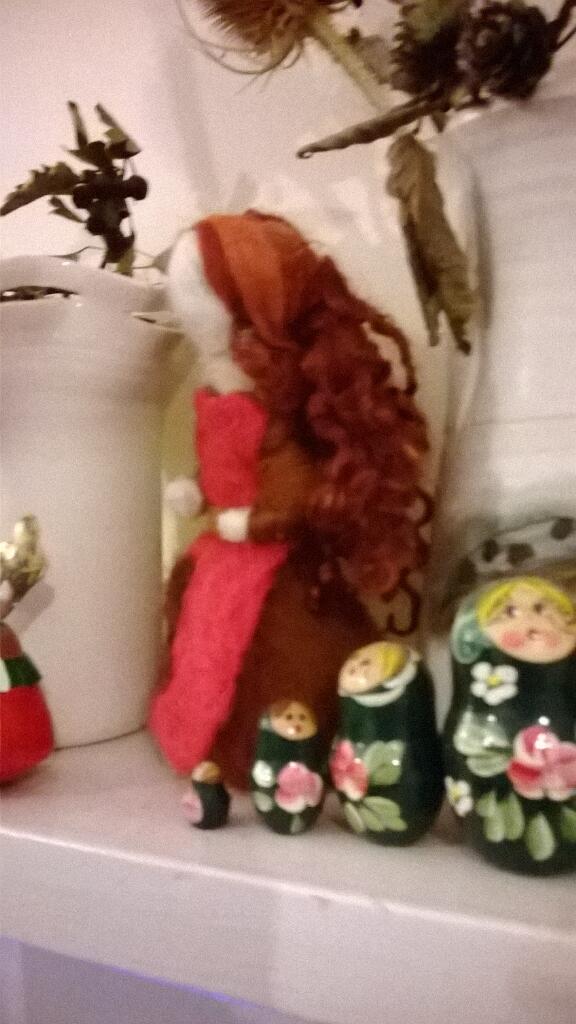
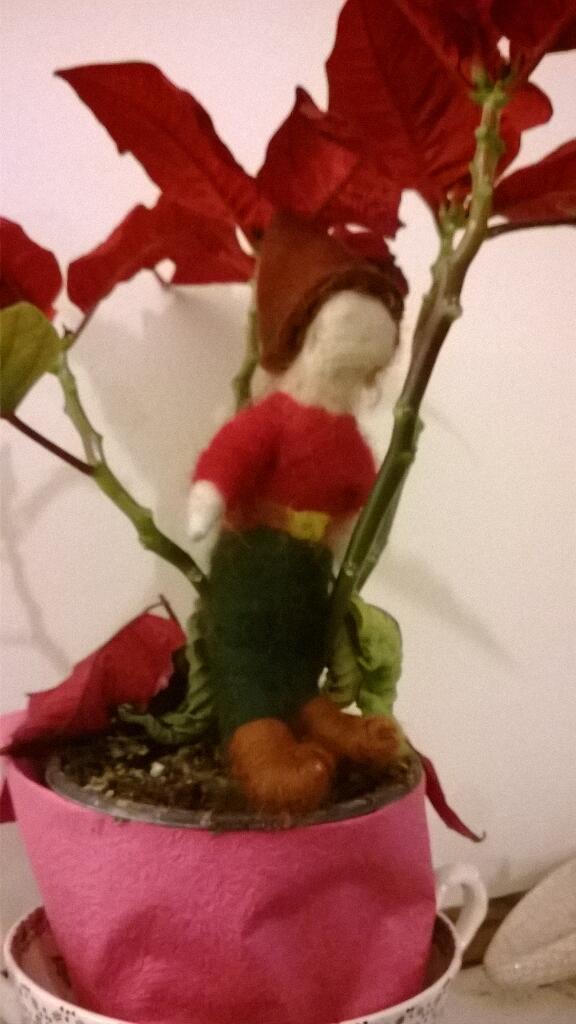
This is the story I told my two wee people before we went exploring in the woods as one of our advent activities. We were lucky enough to find two Oak Tree Folk,they asked to come home with us where they now live on our mantelpiece. Their pictures are below and they were created by the talented MamaPixie. Information has been acquired over the years so difficult to site source as all now in my head!
Most people know an Oak tree when they see one. The distinctive shape of their leaves give them away, as do the fruits they produce in the form of acorns. Very tasty...if you are a squirrel! Most people would also know that Oak trees are long lived. 100 years is merely a youngster in Oak tree terms as they can live up to 800 years!. What a great tree! Well insects certainly think Oak trees are great as they provide them with lots of tasty leaves to eat. In fact, the Oak tree has so many insects feasting on it that it has to grow a second set of leaves in the summer. There are probably fewer people know this fact about the Oak, but now you do so you can share it with those that don't. There are two types of Oak in Britain, the English Oak and the Sessile Oak. The second of these is hardier than the first and prefers cooler climates. For these reasons it is more abundant in Scotland.
So, we have learned some things about Oak trees; they have distinctive shaped leaves (which insects think are tasty), they produce acorns (which squirrels think are tasty), they really are ancient and they can grow a second set of leaves. We also know there are two types in Britain and the Sessile likes to grow in Scotland's cooler climate. Some well known facts, others not so well known. Now, if you come closer there is another fact about Oak trees that only a handful of people know and soon it will be known to you too....
Normally when people walk past an Oak tree they notice it but they don't see it, they don't feel it and they don't touch it. They just notice it and keep walking. That's the problem, you will never really get to know something unless you take the time to let it introduce itself to you. For an Oak tree to be able to introduce itself you have to stop, look at it and listen to it. If you do this and put your ear up to it's rough, tough bark you might hear whispering voices. At first you will probably think it is the breeze rustling the leaves but tune your ears to the whispering and you will begin to make out words, words like grow, nurture, look after in male and female voices. These voices are coming from the hollows inside the Oak trees and belong to the Oak Tree Folk.
The Oak Tree Folk are a group of wee people who live in the Oak trees and watch over them. They ensure the trees are healthy and happy. The Oak Tree Folk know the trees are happy if they produce a lot of acorns, if their leaves are lovely and green and if they can feel the energy of the tree pulsing through it's trunk and branches. If the trees are not healthy or are unhappy the Oak Tree Folk nurse them and nurture them. They polish their leaves so they can absorb as much sunlight as possible, they take water down to their roots when days are long and hot so the tree can soak it up, and they sing soft songs to the Oak to soothe them.
The Oak Tree Folk also look after the animals and insects that live in the Oak trees. They help the squirrels find their hidden acorns when they wake up from their slumber on Winter's warmer days. They sit on the eggs of all different birds that nest in the Oak trees so the adults can go out and find food for themselves. When the eggs hatch the Oak Tree Folk chicksit so the parents can find more food for hungry beaks! The Oak Tree Folk even look out for the Oak Apple Gall wasps whose larvae mutate the leaves of the Oak tree to form a gall around themselves. In June and July the larvae hatch out of the gall as adult wasps and the Oak Tree Folk rejoice as the cycle of life begins again. I guess you might be wondering if the wasps harm the Oak trees, if you are the answer is no, they are perfectly harmless. They are also harmless to the Oak Tree Folk as they do not have a sting like some other types of wasps.
So there you go, now you are one of the few people who know about the Oak Tree Folk. Next time you are in the woods and come across an Oak tree you know what to do...go up to it, feel it and listen to it. Who knows you might hear the Oak Tree Folk, in fact if you are lucky enough you might even see them!!
Most people know an Oak tree when they see one. The distinctive shape of their leaves give them away, as do the fruits they produce in the form of acorns. Very tasty...if you are a squirrel! Most people would also know that Oak trees are long lived. 100 years is merely a youngster in Oak tree terms as they can live up to 800 years!. What a great tree! Well insects certainly think Oak trees are great as they provide them with lots of tasty leaves to eat. In fact, the Oak tree has so many insects feasting on it that it has to grow a second set of leaves in the summer. There are probably fewer people know this fact about the Oak, but now you do so you can share it with those that don't. There are two types of Oak in Britain, the English Oak and the Sessile Oak. The second of these is hardier than the first and prefers cooler climates. For these reasons it is more abundant in Scotland.
So, we have learned some things about Oak trees; they have distinctive shaped leaves (which insects think are tasty), they produce acorns (which squirrels think are tasty), they really are ancient and they can grow a second set of leaves. We also know there are two types in Britain and the Sessile likes to grow in Scotland's cooler climate. Some well known facts, others not so well known. Now, if you come closer there is another fact about Oak trees that only a handful of people know and soon it will be known to you too....
Normally when people walk past an Oak tree they notice it but they don't see it, they don't feel it and they don't touch it. They just notice it and keep walking. That's the problem, you will never really get to know something unless you take the time to let it introduce itself to you. For an Oak tree to be able to introduce itself you have to stop, look at it and listen to it. If you do this and put your ear up to it's rough, tough bark you might hear whispering voices. At first you will probably think it is the breeze rustling the leaves but tune your ears to the whispering and you will begin to make out words, words like grow, nurture, look after in male and female voices. These voices are coming from the hollows inside the Oak trees and belong to the Oak Tree Folk.
The Oak Tree Folk are a group of wee people who live in the Oak trees and watch over them. They ensure the trees are healthy and happy. The Oak Tree Folk know the trees are happy if they produce a lot of acorns, if their leaves are lovely and green and if they can feel the energy of the tree pulsing through it's trunk and branches. If the trees are not healthy or are unhappy the Oak Tree Folk nurse them and nurture them. They polish their leaves so they can absorb as much sunlight as possible, they take water down to their roots when days are long and hot so the tree can soak it up, and they sing soft songs to the Oak to soothe them.
The Oak Tree Folk also look after the animals and insects that live in the Oak trees. They help the squirrels find their hidden acorns when they wake up from their slumber on Winter's warmer days. They sit on the eggs of all different birds that nest in the Oak trees so the adults can go out and find food for themselves. When the eggs hatch the Oak Tree Folk chicksit so the parents can find more food for hungry beaks! The Oak Tree Folk even look out for the Oak Apple Gall wasps whose larvae mutate the leaves of the Oak tree to form a gall around themselves. In June and July the larvae hatch out of the gall as adult wasps and the Oak Tree Folk rejoice as the cycle of life begins again. I guess you might be wondering if the wasps harm the Oak trees, if you are the answer is no, they are perfectly harmless. They are also harmless to the Oak Tree Folk as they do not have a sting like some other types of wasps.
So there you go, now you are one of the few people who know about the Oak Tree Folk. Next time you are in the woods and come across an Oak tree you know what to do...go up to it, feel it and listen to it. Who knows you might hear the Oak Tree Folk, in fact if you are lucky enough you might even see them!!
Monday, 2 December 2013
Fighting
Fighting
This is a special post as it is not about nature or my children. It is for my grandpa on the anniversary of his passing and for all those out there who are also affected by Alzheimer's Disease.
All my life I've been fighting.
As a baby I fought illness
that in those days couldn't be
prevented with an injection.
Surrounded by eight brothers and sisters,
I was always fighting to be heard.
I hated school and constantly thought up
ways to fight the system.
Then, in my late teens, I discovered
what real fighting was.........
..and the loss that went with it.
I fought to get employment,
to keep my family fed, clothed and
with a roof over their heads.
I tried to fight the emptiness
when my only love left too soon.
Now I am fighting this disease.
I am fighting to retain my dignity,
I am fighting to make people see
I am still here, I am still me.
They just need to take the time
to fight the stereotype.
This is my last fight and I can't do it
on my own.
I don't want to admit defeat,
but as I sit here in these strange surroundings
I keep asking myself....
...is there anyone out there fighting for me?
Monday, 25 November 2013
To Be A Child
To Be A Child
To be a child is to:
run with joy to the edge of the sea
and take the plunge without worrying it's too cold;
to dig, dig, dig down into the sand
because you want to dig a hole
and what else could matter more right now?
To be a child is to:
slip and slide down a sandy dune
then run straight up again to slide right back down;
to create pictures in the sand
that the sea will soon swallow,
leaving space for tomorrow's art.
To be a child is to:
search for treasure on the shoreline
in the form of stones, shells and drift wood;
to take these treasures home and admire them,
enjoy them and turn them into stories about
carefree, adventurous, fun filled days.


Saturday, 23 November 2013
Inspiration
Some of my inspiration


These two wee people and their real love of being outside playing, contemplating, guddling for fish, getting wet, climbing and discovering are my inspiration.
Wednesday, 13 November 2013
The Laird and the Puddock
The Laird* and the Puddock**
This story goes back to a time when magic was still common place ( real magic that is not the card trick kind of magic) and when witches (not the kind with pointy hats and broomsticks, the kind with green cloaks and wild hair) were not just found in stories but in everyday life. These witches were in tune with nature and would use berries, bones and burdock to make potions to help all living things.
At this time there was a young laird called Hamish. Hamish had inherited a very large estate and with it the responsibility of looking after many crofters and lots of creatures, large and small. The laird's parents had tried to teach him to be kind and caring and to understand the land belonged to the people and animals living on it as much as it did to him. However, when Hamish became a teenager he became selfish and unkind and this attitude stayed with him as he entered his 20th year and became the laird. His days would be spent hunting the animals on the estate and he would take aim at any creature that moved. The laird's favourite past time was sitting by the large pond at the edge of the estate and, using his old pea shooter he had since he was a boy, he would shoot at the puddocks , toads and newts that were abundant in the pond. He spent no money on the cottages that the crofters lived in and the roofs were leaking and the walls damp and the wind howled in the windows. Meanwhile, the laird would sit in his castle with a fire blazing in every room and warm rugs on every floor.
One night the laird was warming himself against the fire, listening to the wind and rain outside when there was a knock at the big wooden front door. The laird sent his servant to answer it and the servant came back to announce that a very wet and cold lady was standing at the door. He stated she only had a green cloak protecting her other clothes from the elements and she wondered if the owner would be so kind to allow her some warmth for the night. "How dare she!" exclaimed the laird "does she not realise I am the laird and share my house with no one? Send her away!" Reluctantly, and a little scared, the servant went back to pass on the laird's message and the laird never gave a thought as to who or what he had sent out into the cold night.
A few weeks later the laird was down at the pond with his pea shooter and he took aim at a puddock sitting among the rushes. "Ouch!" said a voice as he fired a pea. "Please don't do that". "Who said that ?" asked the laird looking around. "I did". The laird looked at the puddock and gasped. This wasn't any ordinary puddock, this was a long legged, long eyelashed, talking puddock! The laird reached out and grabbed the puddock with both hands. "I know what you are" he said " you are a princess turned into a frog by a witch. If I kiss you, the story goes, you will turn back into a princess, I will marry you and I will run your land as well as my own!" The puddock neither agreed or disagreed and the laird reached down and kissed it! mmmmmmmwah!
Well, what do you think happened next?...............There wasn't a flash, or even a wee bang,in fact there didn't appear to be anything happening! The laird cautiously opened his eyes and the puddock was still there staring back at him. Except.......it seemed much bigger than it had before. The laird went to speak and instead of a word a croaky noise gargled from his throat. He jumped back in fright and quite literally shot into the air. When he landed the laird examined his hands and feet and discovered they were green! He was a puddock! "Well that wasn't the most pleasant kiss I have ever had" said the puddock "but needs must! Now welcome to our pond your lairdship" For a minute all the laird could do was to sit and stare with his huge puddock eyes. Then he found his voice and stated "Our pond? I think you will find it's MY pond, it's on MY land". "Not quite learnt the moral of the story yet have you? Now please follow me, unless you wish to remain in your present state that is". The laird had no choice but to follow and together they dived into the murky waters of the pond.
Once in the pond the laird discovered how effective his long hind legs and webbed toes were at assisting him in swimming. He had never really been comfortable in the water and this was a new experience for him. Suddenly, he swam into something jelly-like. "Yuck!" said the laird "Frog spawn". "Actually" said the puddock "it's toad spawn, it's in a long line. If it were frog spawn it would be in a big mass, like over there."
The laird looked to where she was indicating and sure enough there was a mass of thousands of eggs with dark specks in the middle. "That's disgusting" said the laird "and look how many there are, the pond is going to be overrun with frogs!" The puddock replied "actually, there may be thousands of eggs but out of all those only around five will become adult frogs!" The laird was slightly taken aback by this and without thinking he asked " what happens to the others?" The puddock replied "Well, some are eaten by newts, some are eaten by other tadpoles and some just die. Of course, even when they reach adulthood they are not safe. They could be eaten by birds, or, hit by some uncaring laird who doesn't stop to think what harm he is doing!" The laird said nothing. Just then something swam past him. "A lizard?" he questioned out loud. "No" said the puddock "surely you've seen, or should I say aimed at, a newt before?" The laird could feel embarrassment welling up inside him and he snapped. "Of course I know what a newt is, I am hardly in a position to be thinking straight am I?" "Fine, then you will know that newts are amphibians just like we are, and that newt that swam past us is a male newt as he had a wavy crest. You will also know he is a smooth newt whose numbers are declining due to loss of breeding sites and unthinking lairds!" The laird was beginning to see where this was going. He was also starting to feel the need for air and kicked out with his long back legs to push himself to the surface .
Once at the surface the laird breathed in cool, refreshing air. He then spied a fly and, instinctively, reached out with his tongue, caught it and ate it before he realised what he was doing. The laird climbed onto the mud at the edge of the pond and looked round for the puddock, there was no sign of her. Suddenly, a long beak reached down toward him, opened up and went to grab the laird who had frozen in fright. Just as the laird was about to become dinner for a heron he was pulled into the water. Spluttering he turned to see who had saved him and saw the bulky, warty body of a toad swimming away. "Thank you for saving my life" he called after the toad. The toad looked round. " I know who you are" he said " you've aimed at me a few times, got my eye the last time.I felt like leaving you to your fate but I couldn't. Everyone deserves a second chance. Also, as a frog you're a close relation. In fact in some countries they wouldn't even distinguish us from one another!" The toad then swam away, but not before the laird had seen his empty eye socket.
Just as he was wondering how long he would remain a frog for and starting to recall all that his parents had taught him about being kind and caring, the laird felt a tingle in his body. Then, he suddenly found himself standing knee deep in the middle of the pond. "Welcome back" said a familiar voice behind him. The laird turned and saw a woman with a green cloak and wild hair. "My spell only lasts a short time" she said "but I hope it is enough for you to see that every creature is important and is worthy of your respect. I also hope that the next time a stranger comes to your door you won't be as hasty in turning them away!" With that she disappeared. A wet, cold but much more humble laird made his way back to the castle.
Those around the laird were surprised by the change in him. He was kind and caring, ensured the crofter's homes were made warm and cosy and never again hunted any creatures, big or small. He also never kissed another puddock as life isn't always like a fairytale! He was still partial to the odd fly though!
The End
* A Scottish landowner
** A frog
(just in case you were a bit puzzled!)
Caterpillar
Caterpillar
Daddy, Daddy look what I've found.
Daddy, Daddy look what I've found.
Hurry, come and see!
Actually, before I show it to you
can you guess what it might be?
Mmmm, let me have a wee think,
what could you have there?
It's safely held within your hands
so I'm guessing it's not a polar bear?
Daddy! Don't be silly
it was having lettuce for its lunch.
A polar bear would much prefer
a fish to munch and crunch!
Ahh so it's something that likes lettuce,
that's another clue.
Tell me is there something special
that this wee creature is able to do?
Oh yes Daddy! You're nearly right,
there certainly is!
Once its tummy is full and fat
it becomes a chrysalis!
And Daddy, wait, did you also know
sometimes to keep the chrysalis safe and dry
a cocoon is spun around it,
but only if it's a moth, not if it's a butterfly?
Wow! Really? I didn't know that.
You know so many interesting things.
Tell me are there any differences
between moth and butterfly wings?
Well Daddy since you ask,
there actually is a few.
Butterfly wings are a wee bit bigger
and much more colourful too.
So... this wee caterpillar in your hands,
what do you think it will turn out to be?
Daddy! How would I know?
You'll just have to wait and see!
Friday, 30 August 2013
Nature's Playground
Nature's Playground
Mummy, can we go outside exploring,
let our imaginations run wild and free?
Outside we can soar to the clouds like a buzzard,
or collect nectar like the busy honey bee.
With sticks we could be knights yielding swords,
or create pictures and patterns in the soft soil.
We could mix up potions of berries and leaves
and watch as they bubble and boil!
We could be pirates with trees as our ships,
search for treasure and colourful stones.
Or explorers with magnifying glasses
on the hunt for dinosaur bones!
We could go outside and run,
chase the wind as it ruffles our hair,
make our way to the bridge over the burn,
search for the troll who hides under there!
When we feel a wee bit tired
and need a little rest,
we'll gather up some twigs and moss
to make a big birds nest!
Inside our nest we'll sit
and chatter like birds do,
then when we feel a wee bit peckish
we'll dig up a worm or two!
Wow! Nature's playground sounds amazing,
of course you can go outside.
Just remember if that troll appears
to run away and hide!
Faeries
Faeries
Mummy, are there really faeries?
Are the stories really true?
Do the wee folk really live
alongside me and you?
Mummy, do they really flutter
from Buttercup to Daisy?
In the early morning light
silent, still and hazy.
Do they make their homes in toadstools?
If we look close will we see
a little faerie family
all sitting down to tea?
Are their friends the birds and insects
like wrens, butterflies and bees?
Do they all play hide and seek
among the green leafed trees?
Mummy, have you ever seen one?
Have you heard their tinkling song?
Do you think I might see one?
I hope it won't be long!
I think your thoughtful questions
tell you all you need to hear,
where imaginations flourish
faeries will flutter near.
Sunday, 11 August 2013
Nature's Magic
Nature's Magic
Mummy I am frightened now the nights are getting long,
the sun goes to bed before me,
I can't hear the blackbird's evening song.
The darkness creeps into my room
and casts it's cloak round me,
it makes me dream of monsters and
scary creatures I can't see.
Don't be frightened little one,
don't worry your wee head.
Nature's magic is at work while
you are in your bed.
Though hidden it's your friend the Sun
that gives Moon it's silver glow,
suspended high with twinkling stars
it looks wondrous from below.
I promise you no monsters or scary
creatures are lurking out of sight,
only animals that much prefer to
roam about at night.
Blackbird isn't singing as he's in bed
just like you,
but listen carefully my precious and
you'll hear a distant twit and an answering twoo.
Tawny Owl is focused as he hunts
in silent flight.
He looks mysterious and ghost-like
caught in the lunar light.
So rest your head and close your eyes,
don't let fear stay.
And as you dream so peacefully
night will turn to day.
Mummy I don't think I am frightened now,
still I don't want to sleep.
Please let me slip my hand in yours
so at Nature's magic we can peep.


Subscribe to:
Posts (Atom)